
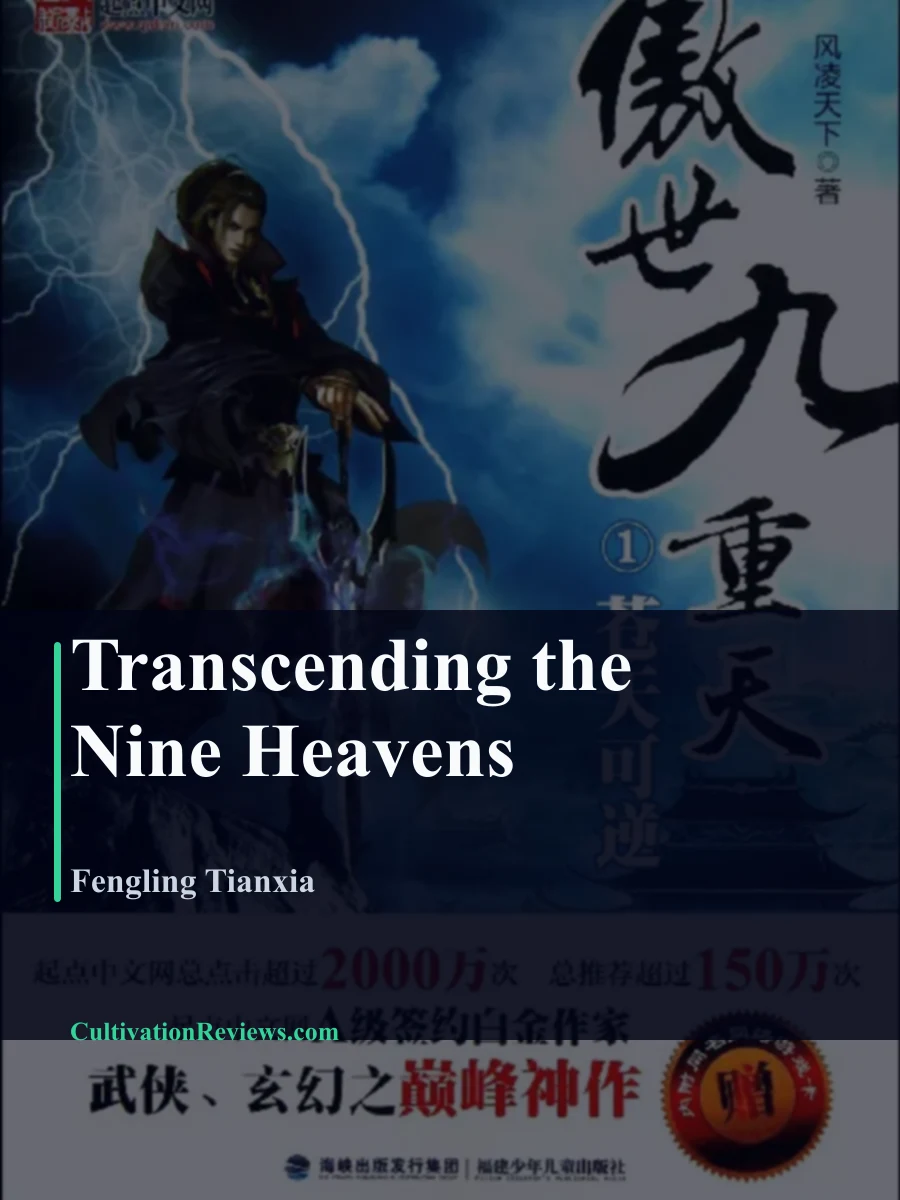
Transcending the Nine Heavens Review: Is It Worth Reading?
Transcending the Nine Heavens is easiest to recommend to readers who want emotion, revenge, sworn bonds, and enormous xuanhuan scale.
Verdict at a glance
Best for
Readers who enjoy reincarnation or second-chance setups.
Skip if
Readers who dislike melodrama.
Review method
This is a spoiler-light editorial assessment focused on whether the novel is worth a long read for a specific kind of reader. The rating summarizes fit, friction, and caveats rather than pretending every story can be ranked by one universal standard.
Reader fit
Who benefits from the premise, tone, protagonist style, and commitment level.
Completion risk
Status is checked as completed before weighing whether this is a safe long read.
Harem status
Relationship structure is treated as a practical fit signal, not a moral score.
Translation readability
Generally readable for the genre, though not frictionless. Expect translated xuanhuan cadence and emphatic emotional phrasing.
Pacing
Driven at the arc level by revenge, protection, and advancement, but the full story is still a major time investment.
Red flags
Harem elements, Long emotional melodrama, Repeated escalation
Who should read
- Readers who enjoy reincarnation or second-chance setups.
- Fans of brotherhood, loyalty, revenge, and high-emotion xuanhuan.
- Readers looking for a completed epic with a strong central drive.
Who should skip
- Readers who dislike melodrama.
- Readers avoiding harem-labeled stories.
- Anyone who wants a restrained, compact cultivation plot.
What it is about
The strongest part of Transcending the Nine Heavens is not novelty; it is intensity. Chu Yang's second chance gives the plot regret, urgency, and a clear emotional promise. The story then builds outward through allies, enemies, treasures, and higher layers of conflict. That scale is the draw and the problem. When the emotional bonds land, the novel feels generous; when the pattern repeats, its length is very visible.
Strengths
- The second-chance premise gives the protagonist immediate motivation.
- Brotherhood and loyalty scenes give the story a warmer core than many power fantasies.
- The completed epic scale is satisfying for binge readers.
Weaknesses
- The tone can become heavy-handed.
- Length and escalation create repetition.
- Romance/harem handling narrows the ideal audience.
Harem / romance notes
The harem label matters here. It should be surfaced clearly so readers who avoid multi-romance dynamics can skip early.
Red flags
Translation quality
Generally readable for the genre, though not frictionless. Expect translated xuanhuan cadence and emphatic emotional phrasing.
Pacing
Driven at the arc level by revenge, protection, and advancement, but the full story is still a major time investment.
Ending / completion notes
The main story is complete, making it safer to recommend than ongoing epics with similar length.
Final verdict
Transcending the Nine Heavens is a good fit when a reader wants a completed, emotional, brotherhood-heavy xuanhuan. It is too melodramatic and harem-coded for some, but it has a clearer heart than many massive power climbs.