
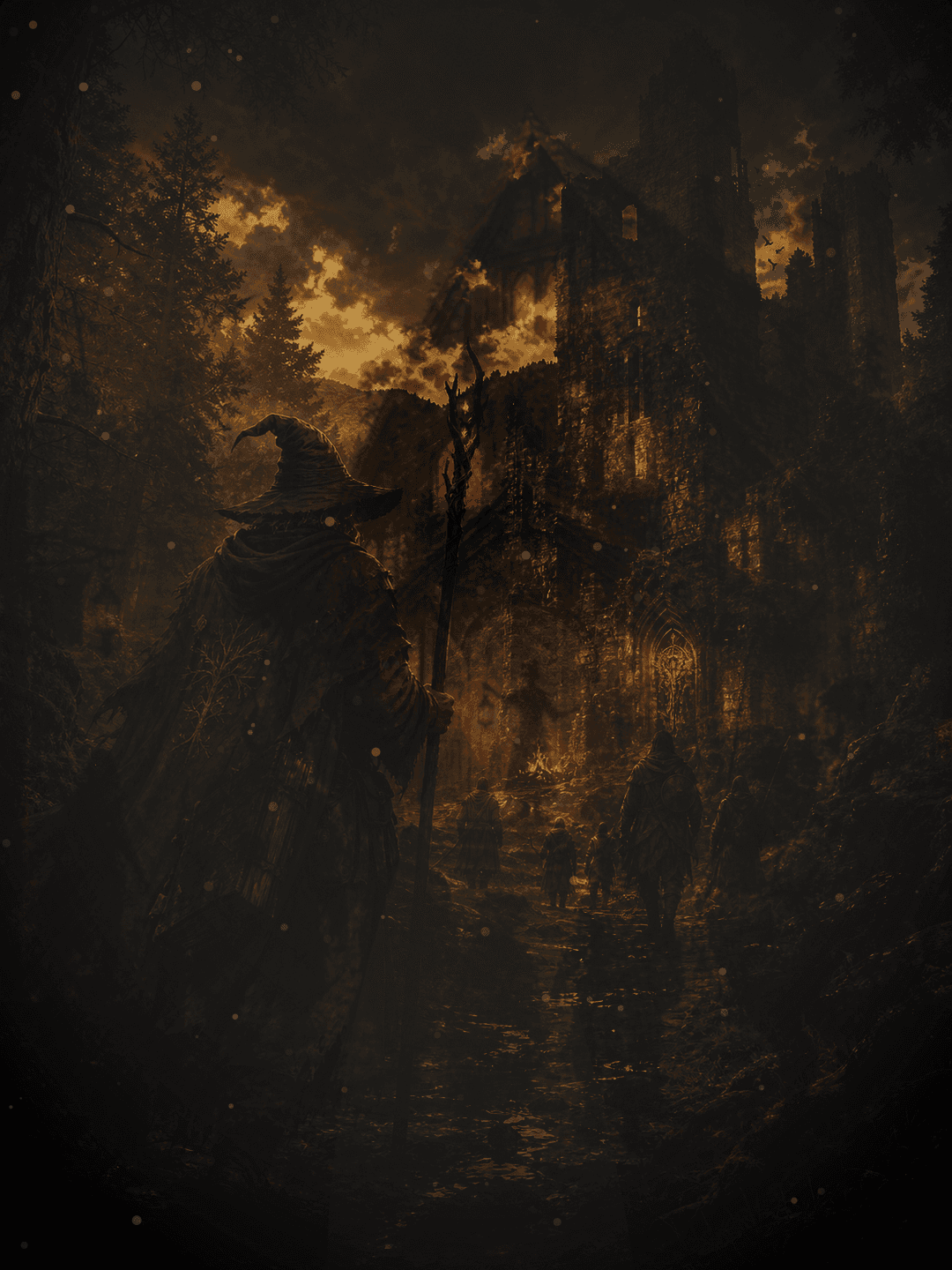
The Blacktongue Thief Review: A Dirty Road, a Great Voice
A roguish dark-fantasy road novel with a nasty sense of humor, strong narration, and more sadness under the jokes than it first admits.
Verdict at a glance
Best for
Readers who prize voice and banter
Skip if
Readers sensitive to crude language
Who should read
- Readers who prize voice and banter
- Dark fantasy fans who like thieves, knights, curses, and ugly history
- People who want a complete book rather than a thousand-chapter climb
Who should skip
- Readers sensitive to crude language
- Anyone who needs a noble heroic lead
- Progression readers who want visible ranks, stats, or training loops
What it is about
The Blacktongue Thief is a voice book first and a quest book second, which is exactly why it works. Kinch does not narrate like a chosen hero reluctantly carrying destiny. He sounds like a man who has survived by talking quickly, noticing exits, offending the wrong people slightly less often than he entertains them, and telling the story before someone else can make him look even worse. That voice is funny, vulgar, slippery, and occasionally more wounded than it wants to admit. If you bounce off Kinch in the opening stretch, the book will probably never become your book. If he hooks you, the road becomes addictive.
The world has the texture of a place that has been used hard. Wars have not left behind clean heroic legends; they have left debt, missing people, monsters, resentments, and professions that exist because somebody always loses. The book is full of mud, bad bargains, old violence, strange magic, religious pressure, and the kind of gallows humor people use when history has already made politeness absurd. It is dark fantasy, but not the flat kind where everyone simply scowls in the rain. Buehlman lets the book be rude and funny without pretending that humor cancels consequence.
Galva is the counterweight that keeps the novel from becoming one long rogue monologue. A lesser version of this story would make the knight a straight-faced prop for Kinch's jokes. Here, she brings discipline, grief, faith, and a different relationship to violence. Their pairing has the old pleasure of mismatched travel companions, but the friction is not purely comedic. Kinch talks his way around danger; Galva carries danger in her posture. Watching them move through the same broken landscape from different moral angles is much of the fun.
This is not progression fantasy in the mechanical sense. There are no levels to count and no academy ladder to climb. Still, readers who enjoy competence fantasy may find a related pleasure here. Kinch is not becoming stronger in the usual genre way, but the reader is constantly measuring what he knows: who he can cheat, which joke is cover for fear, when a debt is more dangerous than a blade, and how much truth he can afford to tell an ally. He survives through languages, debts, tricks, timing, partial truths, and an ability to read a room before the room reads him. Progress feels like acquiring a better sense of how ugly the world is and how much of that ugliness can be navigated without becoming completely hollow.
The warnings are not decorative. The humor is crude, sometimes aggressively so. The violence can be sharp, and the book's history of war is genuinely bleak. It also relies so heavily on first-person narration that the style is not separable from the story. I would not recommend it to someone who wants noble high fantasy or a clean party adventure. I would recommend it very strongly to readers who want a fantasy novel with dirt under its nails, a narrator with too many survival habits, and jokes that keep turning into bruises when you look at them twice.
Strengths
- Distinctive first-person narration
- Strong road-adventure momentum
- Dark worldbuilding with humor and consequence
- Excellent rogue-and-knight contrast
Weaknesses
- Crude humor and language are constant taste filters
- Not progression fantasy in the mechanical sense
- Some readers may find the narrator too performative
Harem / romance notes
No harem structure. Relationship tension and companionship matter, but the book is not organized around romantic collection.
Red flags
Translation quality
Native English prose with a deliberately rough, oral-storytelling snap. The style is the selling point, not a neutral delivery system.
Pacing
Road-novel pacing with frequent incidents, stories, and reversals. The voice keeps it moving even when the plot takes scenic turns.
Ending / completion notes
The first book has a satisfying shape while leaving room for the wider world and later stories.
Final verdict
A strong dark-fantasy recommendation for readers who want personality first. Come for the thief voice; stay for the way the jokes keep revealing scars.