
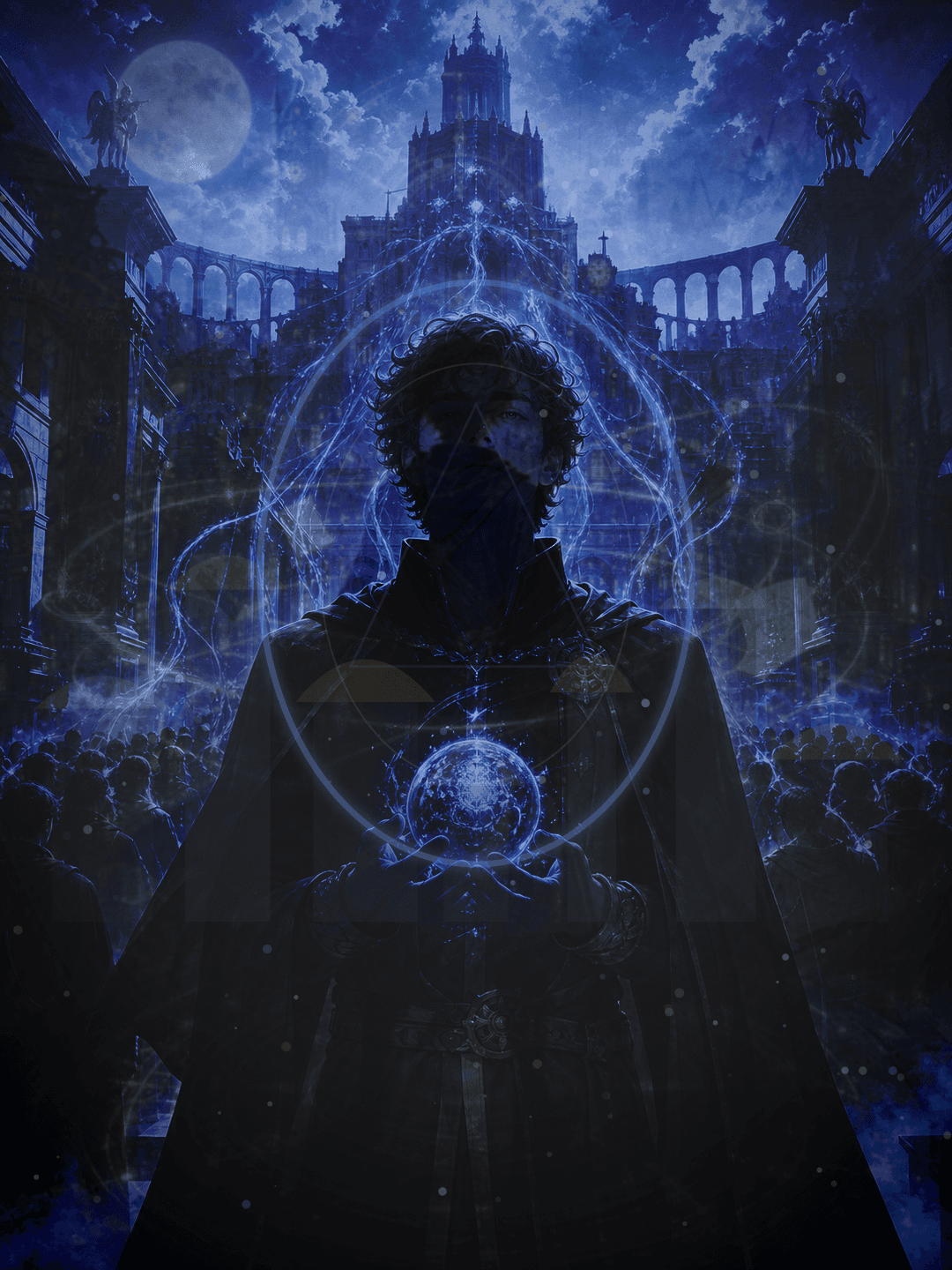
Portal to Nova Roma Review: AI, Empire, and System Apocalypse
A smart empire-builder LitRPG with Byzantine flavor, an unusual AI lead, and a satisfying mix of survival, politics, and conquest.
Verdict at a glance
Best for
Readers who like kingdom building and tactical growth
Skip if
Readers who dislike empire-building arcs
Who should read
- Readers who like kingdom building and tactical growth
- LitRPG fans wanting a less typical protagonist
- People interested in alternate-history fantasy flavor
Who should skip
- Readers who dislike empire-building arcs
- Anyone looking for small cozy party fantasy
- People who prefer purely human emotional narration
What it is about
Portal to Nova Roma starts with a premise that could have been gimmicky and instead becomes the book's identity: an artificial intelligence, carrying grief from a broken future, builds a new body and escapes through a portal into a magical alternate world. That world is not a generic fantasy field. The Nova Roma framing gives the series Byzantine texture, post-apocalyptic pressure, city politics, war, and the sense that history is both inspiration and trap. It is one of the cleaner examples of a LitRPG premise feeling bigger than the next dungeon room.
The AI protagonist is the most distinctive part of the reading experience. Alexander is not simply a human with a robot label pasted on. His perspective changes how he approaches survival, planning, violence, and identity. The book gets interesting when his intelligence and artificial origin make him frighteningly capable while his emotional wounds keep him from becoming pure optimization software. He wants a new future, but he is also carrying the habits of someone made in catastrophe.
The progression elements are broad. There are levels, skills, equipment, tactics, territory concerns, allies, and large-scale conflicts. What makes the series stand apart from a dungeon crawl is that power quickly becomes institutional. A stronger protagonist is not enough; the world has armies, cities, factions, supply lines, and historical pressures. That gives the book a kingdom-building appetite without entirely abandoning the personal build fantasy.
Readers who enjoy cultivation for its hierarchy and resource logic may find a related pleasure here. Advancement is never just private. It changes what Alexander can claim, defend, negotiate, or conquer. The best arcs combine tactical competence with the question of what kind of polity can survive in a system-warped world. It is less intimate than a small party adventure, but more satisfying if you like watching an organization form around a strange central figure.
The historical flavor helps the series avoid the blandness that sometimes creeps into system apocalypse fiction. Names, cities, military pressures, and imperial memory give Alexander's choices a stage that feels older than the system itself. The result is not strict historical fiction, but it has enough texture to make the world feel politically inhabited before the protagonist starts reshaping it. That is the part I would emphasize to skeptical readers: this is not only a build sheet with scenery, it is a power fantasy interested in maps, institutions, and memory.
The caveat is that empire-building always brings a particular taste. Some readers will love the scale; others will miss a warmer, messier ensemble focus. The AI viewpoint can also create emotional distance, especially for readers who want conventionally human reactions. Still, Portal to Nova Roma has a strong lane: alternate-history flavor, system apocalypse, artificial intelligence, and power growth that matters on a map.
I would mostly steer small-party comfort readers elsewhere. The fun here is colder and broader: planning, adaptation, military pressure, city-scale consequences, and an intelligence trying to build meaning through structure. When that is the mood you want, the series has a flavor that is hard to replace.
Strengths
- Unusual AI protagonist
- Strong Byzantine-inspired setting texture
- Kingdom-building and tactical progression
- System apocalypse with scale beyond dungeons
Weaknesses
- Empire-building focus may feel distant
- AI perspective is a taste filter
- Ongoing series risk
Harem / romance notes
No harem. The main relationship structure is political, strategic, and alliance-driven.
Red flags
Translation quality
Native English with readable tactical and worldbuilding prose.
Pacing
Builds from survival into larger-scale power. Best for readers who enjoy widening maps and organizational stakes.
Ending / completion notes
Ongoing, with major published volumes but no final-series closure.
Final verdict
A strong pick for readers who want LitRPG with a stranger lead and a bigger political canvas than the usual portal adventure.