
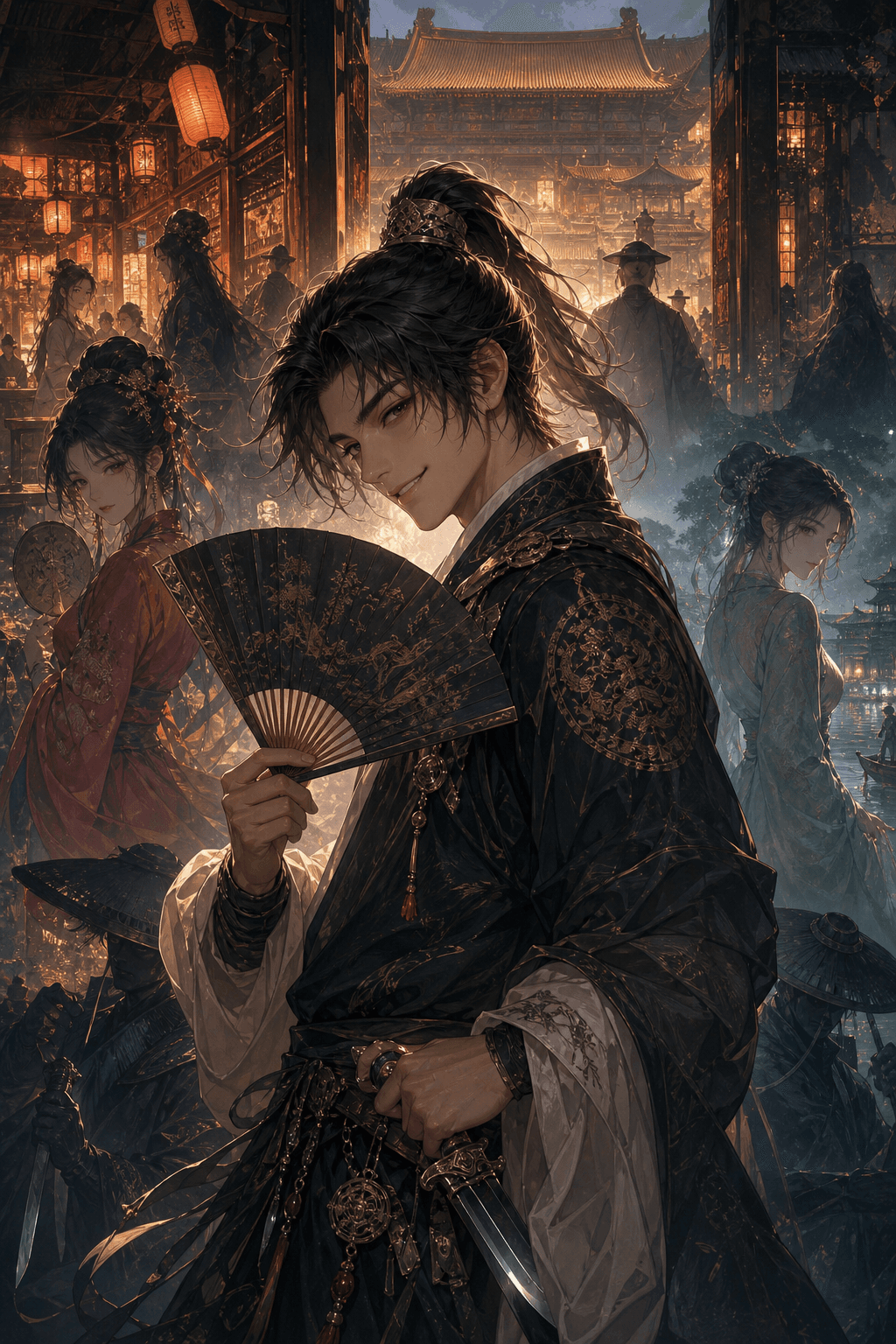
The Deer and the Cauldron Review: Is It Worth Reading?
A sharp political comedy and antihero survival story, but its harem elements and unheroic lead need loud warning labels.
Verdict at a glance
Best for
Readers who like scheming protagonists
Skip if
Strict no-harem readers
Review method
This is a spoiler-light editorial assessment focused on whether the novel is worth a long read for a specific kind of reader. The rating summarizes fit, friction, and caveats rather than pretending every story can be ranked by one universal standard.
Reader fit
Who benefits from the premise, tone, protagonist style, and commitment level.
Completion risk
Status is checked as completed before weighing whether this is a safe long read.
Harem status
Relationship structure is treated as a practical fit signal, not a moral score.
Translation readability
Published translations make it more accessible than many classics, though the tone and cultural context still ask for patience. The humor, court setting, and historical references need a different reading posture from modern xianxia.
Pacing
Driven by schemes, status shifts, court danger, and comic survival rather than training arcs or tournament escalation. It moves through leverage more than levels.
Red flags
Harem elements, Unheroic protagonist, Court-politics focus over martial progression
Who should read
- Readers who like scheming protagonists
- Fans of court intrigue and political comedy
- Jin Yong readers ready for a less noble hero
Who should skip
- Strict no-harem readers
- Readers who need a virtuous martial hero
- Anyone looking for conventional cultivation progression
What it is about
The Deer and the Cauldron is often fascinating because Wei Xiaobao is not the noble martial ideal. He survives through quick thinking, shamelessness, social instincts, and political luck, turning the story into a rogue's tour through power rather than a clean hero's ascent. That makes it especially interesting for readers who like scheming protagonists, but it also means the normal satisfaction of martial growth is deliberately displaced by politics, comedy, and compromise.
Strengths
- Excellent political and social maneuvering
- Distinctive antihero voice
- Sharp contrast with more idealistic wuxia
- Court intrigue and social survival replace simple training escalation
Weaknesses
- Harem elements are central enough to be divisive
- The protagonist can be hard to admire
- Less satisfying if you want martial mastery as the main reward
- The comedy and baggage can pull in opposite directions for modern readers
Harem / romance notes
Harem elements are prominent. Readers avoiding multiple-wife or rogue-romance structures should skip this one without guilt.
Red flags
Translation quality
Published translations make it more accessible than many classics, though the tone and cultural context still ask for patience. The humor, court setting, and historical references need a different reading posture from modern xianxia.
Pacing
Driven by schemes, status shifts, court danger, and comic survival rather than training arcs or tournament escalation. It moves through leverage more than levels.
Ending / completion notes
Completed. The main question is taste fit, not closure risk.
Final verdict
A brilliant but non-universal classic. It is most rewarding when approached as political satire and rogue comedy, not as heroic progression, and the harem warning should be treated as a real reader-fit boundary.