
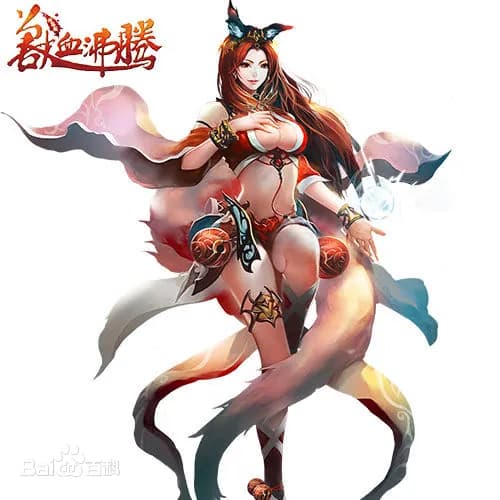
Beast Blood's Boiling Review: Old-School Beastfolk Fantasy With Heavy Warnings
Beast Blood's Boiling is historically interesting and occasionally rousing, but it should be recommended only with clear harem and old-school-content warnings.
Verdict at a glance
Best for
Readers curious about older Chinese fantasy beyond standard sect cultivation.
Skip if
No-harem readers.
Review method
This is a spoiler-light editorial assessment focused on whether the novel is worth a long read for a specific kind of reader. The rating summarizes fit, friction, and caveats rather than pretending every story can be ranked by one universal standard.
Reader fit
Who benefits from the premise, tone, protagonist style, and commitment level.
Completion risk
Status is checked as completed before weighing whether this is a safe long read.
Harem status
Relationship structure is treated as a practical fit signal, not a moral score.
Translation readability
English availability and polish are weaker than mainstream translated classics, so expectations should be modest.
Pacing
Rousing in war and tribe-building scenes, less disciplined as the old-school wish fulfillment expands.
Red flags
Harem-forward wish fulfillment, Dated gender dynamics, Violence and crude old-school fantasy tone
Who should read
- Readers curious about older Chinese fantasy beyond standard sect cultivation.
- Fans of beastfolk worlds, shaman roles, tribe-building, and war arcs.
- Harem-friendly readers with high tolerance for old-school excess.
Who should skip
- No-harem readers.
- Readers who dislike crude male wish fulfillment.
- Readers sensitive to violence, sexualized romance, or dated gender dynamics.
What it is about
Beast Blood's Boiling has a stronger setting identity than many simple power fantasies: a modern man becomes a rare priest in a beastfolk world, and the story builds around tribal identity, war, faith, and racial tension. The early appeal is not just that Liu Zhenhan gets stronger; it is that he becomes important inside a society with its own rituals, species politics, and martial pride.
That identity is the reason to cover it. It represents an older Chinese fantasy lane where beastfolk worldbuilding, military spectacle, and masculine wish fulfillment are fused together.
The reason to warn readers is just as clear: the harem and old-school masculine wish fulfillment are not small side effects, and many modern English readers will bounce off the tone immediately.
Strengths
- Beastfolk and shaman-priest setup gives the novel a distinct fantasy lane.
- War and tribe-building material can feel energetic.
- Completed status makes it easier to catalog as an older title.
Weaknesses
- Harem and sexualized relationship material are major dealbreakers.
- Old-school masculinity can feel crude or dated.
- Later scale and cast expansion can become bloated.
Harem / romance notes
This is harem-forward enough that the label should be impossible to miss. Do not recommend it to no-harem readers.
Red flags
Translation quality
English availability and polish are weaker than mainstream translated classics, so expectations should be modest.
Pacing
Rousing in war and tribe-building scenes, less disciplined as the old-school wish fulfillment expands.
Ending / completion notes
Completed, but not broadly safe; reader fit matters more than completion.
Final verdict
Beast Blood's Boiling is worth adding as a historical/genre-context entry, not as a universal recommendation. It helps explain one branch of older Chinese fantasy taste: loud, martial, tribe-centered, indulgent, and very male-targeted.
It should live behind clear tags and warnings. The right reader may find its energy memorable; the wrong reader will know from the first screen that it is not for them.